Start with the preferred parent, not a perfect parent
The ideal self is the realistic parent someone wants or expected to become. The real self is how that person currently thinks, feels, acts, and lives, including strengths as well as difficulties. Comparing them is not a shame exercise. It gives the parent language for what matters and a way to see both existing resources and meaningful gaps.
The five discoveries create a learning path
The source presents ICT as a process of identifying the ideal self, recognizing the real self, creating a learning agenda, experimenting with change, and building trusting relationships. It gives structure to change while leaving the actions personal and family-specific.
- Ideal self: who does the parent want to become?
- Real self: what is happening now, including strengths and gaps?
- Learning agenda: which goals and strategies can address a meaningful gap?
- Experimentation: what can be tried, observed, adjusted, and repeated?
- Trusting relationships: who can offer encouragement, accountability, and support?
Experiment instead of waiting for certainty
A learning agenda is not a fixed verdict about the parent. It is a practical plan for testing new thoughts, feelings, beliefs, and behaviours through trial and error. The parent can use strengths already present, choose a small experiment, review what happened, and revise the next step.
Support keeps change connected
The session places trusting relationships at the centre of change. A coach, partner, peer, family member, parent group, or workshop can offer encouragement and reflection. Support should strengthen the parent’s ownership, not replace it with dependence on someone else’s answers.
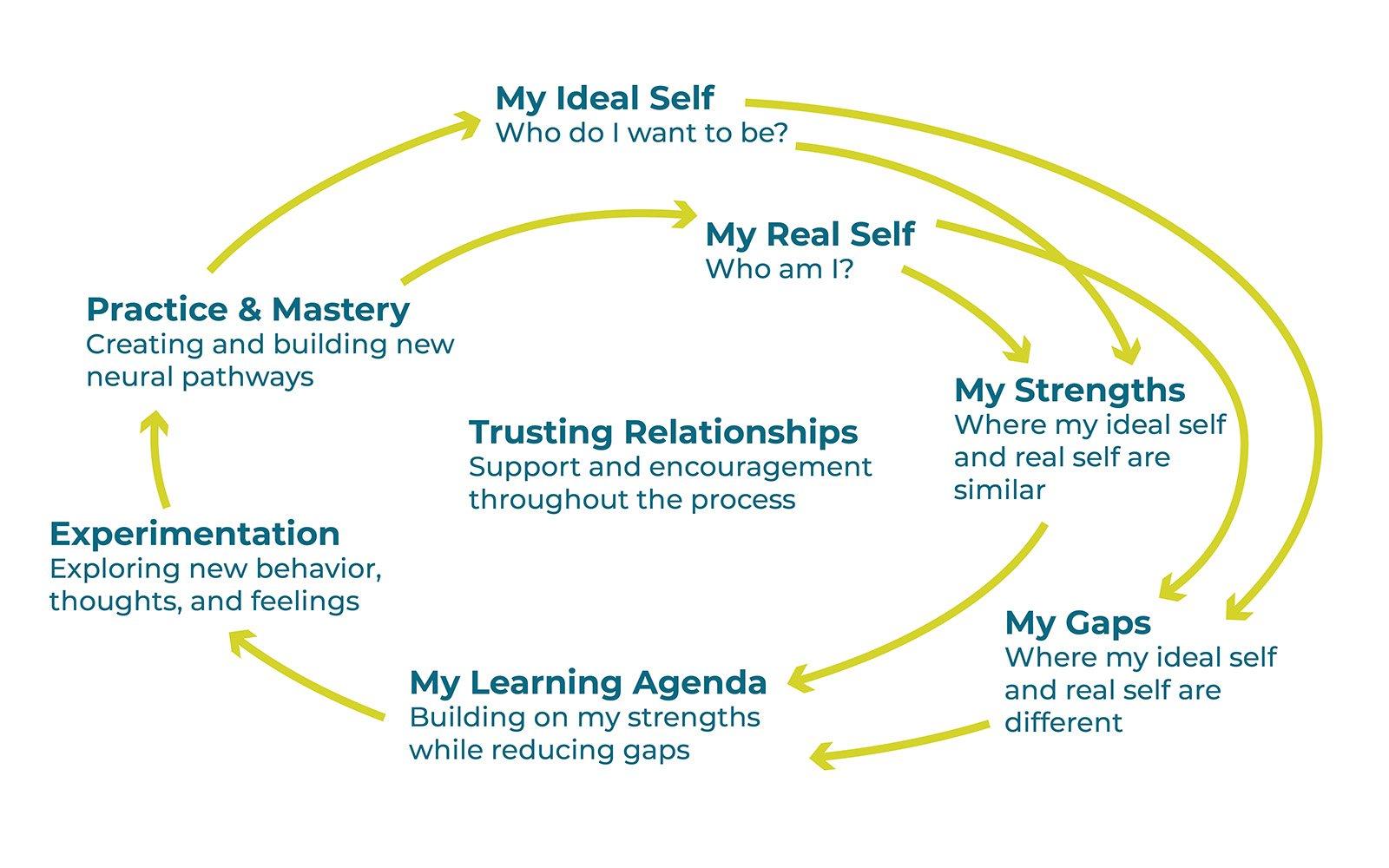
The ICT cycle as a diagram
The course deck shows Intentional Change Theory as a cycle. It splits the comparison of ideal and real self into two discoveries, strengths where they are similar and gaps where they differ, and adds practice and mastery after experimentation, with trusting relationships at the centre of the whole process. The diagram’s label for practice, “creating and building new neural pathways,” is its own wording rather than a finding this module verifies.
Five steps with parenting examples
The deck also sets out the model as five steps a parent can work through, each with a sample statement.
| Step | How | Example |
|---|---|---|
| 1. Identify the ideal self | Define the parent you want to be | “I want to be a patient and supportive parent.” |
| 2. Recognise the real self | Assess your current parenting style, including strengths and gaps | “I often yell when I’m frustrated.” |
| 3. Create a learning plan | Set goals and plan new strategies | “I will practise deep breathing before responding.” |
| 4. Experiment with change | Test new behaviours in real situations | “I will try speaking calmly instead of yelling.” |
| 5. Build a support system | Surround yourself with supportive people | “I will join a parenting group for encouragement.” |