The ego protects
In this framework the ego is not a flaw. It tries to keep a person emotionally safe and steers decisions toward what feels safe and familiar. The instructor contrasts this with the everyday phrase that someone “has an ego.” The deck calls it an internal manager trying to keep you safe, in control, and emotionally balanced. When it is out of balance, the instructor says it can produce negative reactive patterns or rigid behaviour.
Three states
The session distinguishes three ego states, each with a different relationship between emotion and thought.
| Ego state | Brain link given | What it does |
|---|---|---|
| Primary ego | Amygdala | Reacts instantly and automatically, especially under stress, based on past experiences and fears. |
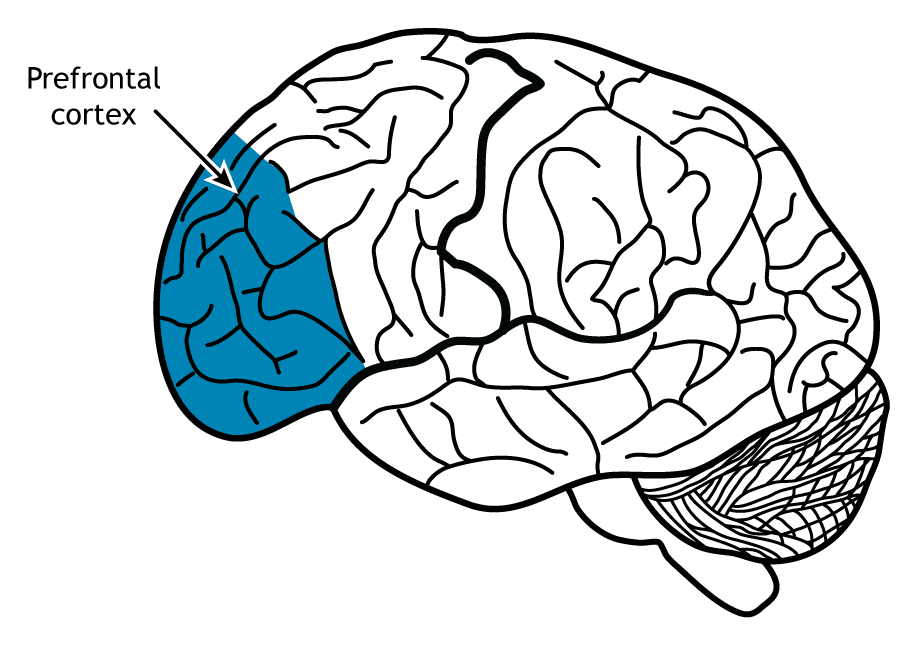
| Aware ego | Prefrontal cortex | The observer: steps back, pauses, and uses thinking and reasoning before responding. |
| Higher self | Integrated brain regions | Combines emotion and thought, leading with kindness, empathy, compassion, respect, communication, and long-term values. |
Read with careThe links to the amygdala, the prefrontal cortex, and integrated brain regions are the instructor’s and the deck’s teaching labels. The supplied material gives no evidence for them.
The aware ego and the observer self
The aware ego makes the same move taught with the observer self in Module 4.1: noticing a reaction before acting on it. The course’s Brain and Emotions deck opens with a simple drawing of the prefrontal cortex, the region the session associates with this pausing, reasoning state.
Ask what each part is saying
The instructor uses empty chairs placed facing one another for a dialogue among the primary self, the disowned self, and the ego. Ask what each part is saying and what it is trying to protect, then reframe limiting beliefs the parent finds unsupported and rehearse new ways of being through visualization or role-play. One of her questions to the ego is linguistically unclear and may mean what the ego is protecting the person from.